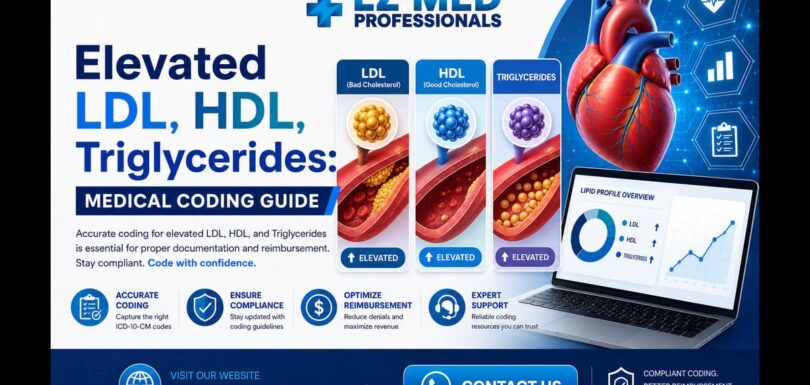
Comprehensive chart showing E78.0 through E78.9 ICD-10 codes for lipid disorder classification with descriptions

Elevated LDL, HDL, Triglycerides: Medical Coding Guide

Elevated LDL, HDL, triglycerides coding requires precise understanding of ICD-10-CM classification systems and CPT procedural terminology. Medical coding for lipid disorders uses E78.0 through E78.5 codes identifying specific abnormalities. Accurate ICD-10 lipid coding ensures proper reimbursement and compliance with regulatory standards. Healthcare professionals must understand diagnosis coding for hyperlipidemia, documentation requirements, and billing accuracy principles […]
Continue Reading
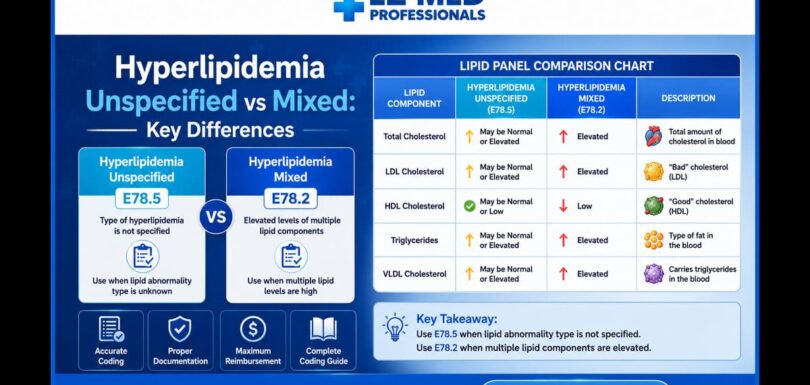
Comparison chart showing normal, borderline, and high lipid panel values including cholesterol, LDL, HDL, and triglycerides

Hyperlipidemia Unspecified vs Mixed: Key Differences

Hyperlipidemia unspecified and mixed hyperlipidemia are distinct lipid metabolism disorders. Unspecified hyperlipidemia occurs when elevated lipids are present without clear classification. Mixed hyperlipidemia involves simultaneous elevation of cholesterol and triglycerides. Understanding these differences is crucial for proper diagnosis and effective treatment planning in clinical practice. Hyperlipidemia unspecified vs mixed-Lipid metabolism disorders affect millions of patients […]
Continue Reading
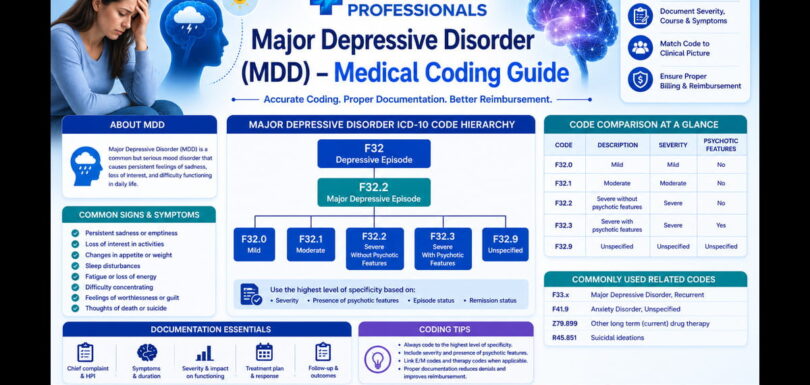
Hierarchical flowchart showing F32 single episode and F33 recurrent major depressive disorder codes with severity level branches

Major Depressive Disorder (MDD) – Medical Coding Guide

Major depressive disorder (MDD) medical coding requires precise understanding of ICD-10-CM classification codes reflecting specific clinical presentations. Accurate depression diagnosis coding depends on understanding major depressive disorder ICD-10-CM code selection procedures, severity documentation, and episode specificity. Healthcare professionals must master the distinction between recurrent major depressive disorder coding versus single episode presentations, determine appropriate clinical […]
Continue Reading
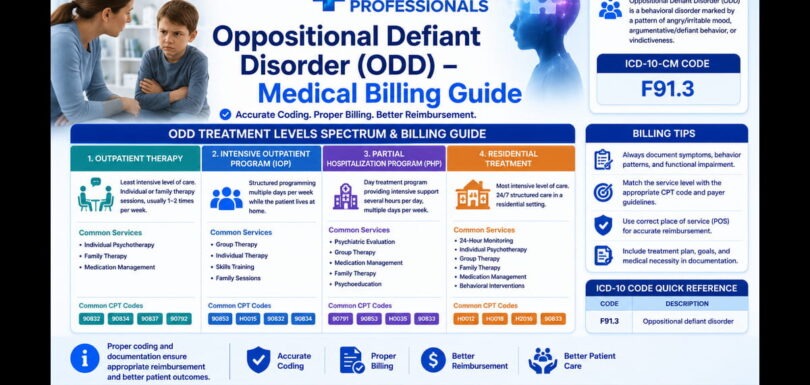
Spectrum showing outpatient therapy, intensive outpatient, partial hospitalization, and residential treatment levels with corresponding billing codes

Oppositional Defiant Disorder (ODD) – Medical Billing Guide

Oppositional defiant disorder (ODD) medical billing requires comprehensive understanding of reimbursement procedures, insurance requirements, and behavioral health revenue cycle management. Accurate ODD billing and coding depends on proper diagnostic documentation, appropriate service coding, and understanding payer-specific policies for pediatric behavioral health claims. Healthcare organizations providing behavioral health billing for ODD treatment must implement systematic procedures […]
Continue Reading
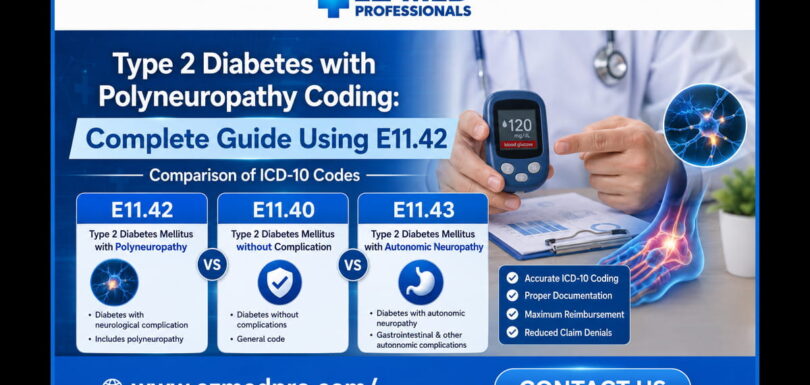
Comparison of ICD-10 codes E11.42, E11.40, and E11.43 for type 2 diabetes with and without complications

Type 2 Diabetes with Polyneuropathy Coding: Complete Guide Using E11.42

The correct ICD-10 code for diabetic polyneuropathy in type 2 diabetes is E11.42. This combination code represents type 2 diabetes mellitus with diabetic polyneuropathy. Unlike E11.40 (diabetes without complications), E11.42 specifically captures nerve damage. Use this code when documentation confirms peripheral neuropathy caused by diabetes. The code includes both the diabetes and the complication. Do not code diabetes and neuropathy separately. Proper documentation […]
Continue Reading
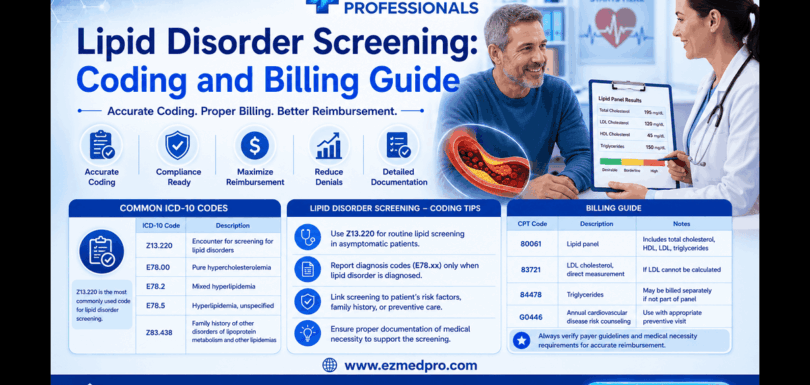
Lipid disorder screening coding and billing guide

Lipid Disorder Screening: Coding and Billing Guide

Lipid disorder screening coding and billing involves selecting accurate ICD-10 codes for lipid disorders — such as E78.5 (hyperlipidemia, unspecified) — Lipid Disorder Screening Coding and Billing paired with the correct CPT codes for lipid screening, including CPT 80061 (lipid panel) and CPT 82465 (cholesterol test). Proper documentation, payer-specific rules, and Medicare coverage guidelines are […]
Continue Reading
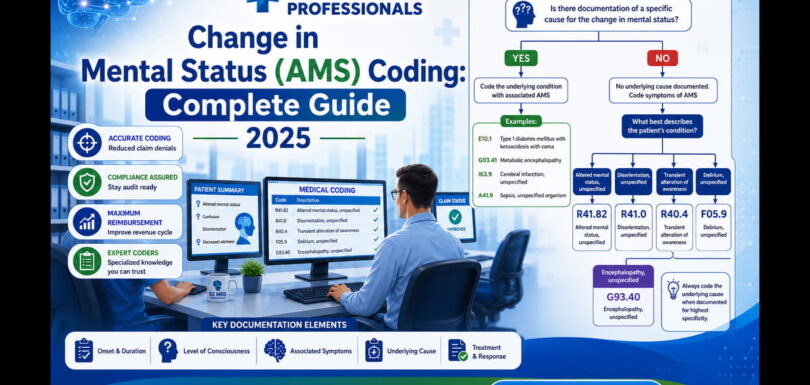
change in mental status AMS coding decision tree R41.82 vs G93.41 vs F05

Change in Mental Status (AMS) Coding: Complete Guide 2025

The correct change in mental status (AMS) coding starts with R41.82 (altered mental status, unspecified) when the cause is unknown. Once a specific cause is identified, upgrade to G93.41 (metabolic encephalopathy), G93.40 (encephalopathy unspecified), or F05.0/F05.1 (delirium). Always code the underlying etiology such as sepsis (A41.9 + G93.41) or UTI (N39.0 + R41.82). Do not use R41.82 once encephalopathy is confirmed. Change in mental status […]
Continue Reading
x

We always support in emergencies, contact us immediately if you are experiencing any serious health problems.

Contact With Us!

Address: 625 Sullivan Dr NE, Columbia Heights, MN 55421

Support mail: info@ezmedpro.com

Opening Hours: Mon -Sat: 9.00am – 6.00pm

Phone Number: (763) 244-1500